
EMDR Therapy for Anxiety: How Eye Movements Can Calm Your Nervous System
Jun 29, 2026Discover how online EMDR therapy treats anxiety disorders rapidly and effectively. UK therapist explains how bilateral stimulation rewires anxious responses for lasting relief.
Anxiety is one of the most common mental health challenges, yet many people struggle to find effective relief through traditional therapy alone. If you’ve tried talk therapy or self-help strategies without lasting results, EMDR therapy offers a different approach—one that works directly with how your nervous system processes fear.
About the Author: This article is written by Jenny Palmer, a qualified Cognitive Behavioural Therapist (CBT), EMDR specialist, and Couples Therapist. Jenny provides evidence-based online EMDR therapy for anxiety, panic disorder, and trauma-related conditions across the UK.

Why Traditional Anxiety Treatment Often Doesn’t Stick
Anxiety doesn’t just live in your thoughts. It’s stored in your body and nervous system as a learned fear response. When you experience anxiety repeatedly or after a triggering event, your brain essentially “learns” that the situation is dangerous—even when it’s objectively safe.
Talk therapy can help you understand your anxiety, but understanding alone doesn’t always change the deep nervous system response that keeps the anxiety alive. This is where EMDR differs fundamentally.
How EMDR Rewires Anxiety at the Nervous System Level
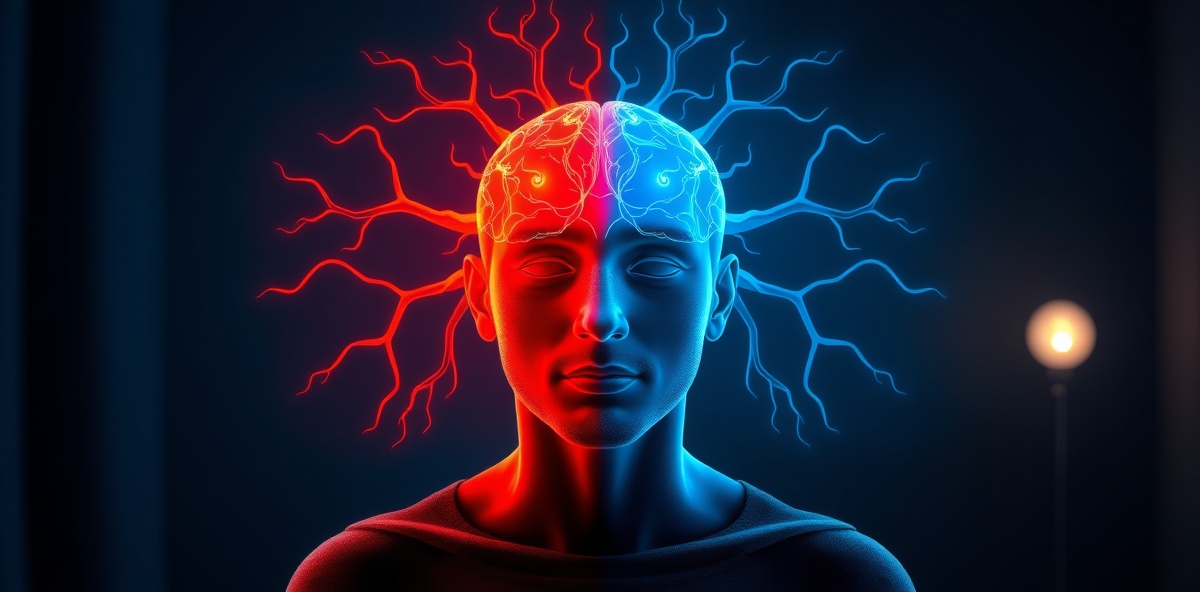
EMDR uses bilateral stimulation (eye movements, tapping, or sounds) to help your nervous system “reset” its fear associations. Rather than just talking about anxiety, EMDR helps your brain update the threat perception—moving the anxious memory from active fear to a neutral memory.
Here’s what happens in an EMDR session for anxiety:
- Activation — You focus on the anxiety-triggering situation while recalling the physical sensations (racing heart, shortness of breath, tension)
- Bilateral Stimulation — Your therapist guides your eye movements side-to-side or uses tapping/sounds
- Processing — Your nervous system begins to “unlock” the frozen fear response, and anxiety intensity naturally decreases
- Integration — The situation becomes less threatening; your body learns it’s safe
Unlike exposure therapy (which asks you to sit with anxiety until it passes), EMDR doesn’t require you to tolerate prolonged discomfort. The bilateral stimulation appears to speed up your brain’s natural processing, reducing anxiety more rapidly.
What Research Shows About EMDR for Anxiety
The evidence is compelling:
- 80-90% of single-trauma PTSD patients no longer meet diagnostic criteria after EMDR—many of whom had comorbid anxiety disorders
- 3-8 sessions typically show measurable improvement for specific anxiety triggers (compared to 12+ weeks for traditional CBT)
- Phobias and panic disorder respond particularly well to EMDR
- Social anxiety and performance anxiety often resolve within 5-10 sessions
- Long-term results: Gains are maintained at 6-12 month follow-ups with low relapse rates
The World Health Organization (WHO) and NICE (National Institute for Health and Care Excellence) both endorse EMDR as an evidence-based treatment for anxiety disorders, particularly when anxiety is rooted in traumatic memories or phobias.
EMDR vs. Anxiety Medications
Medications can manage anxiety symptoms, but EMDR addresses the root cause. Many clients who’ve taken anxiety medication for years find that after EMDR treatment, they can reduce or discontinue medication because the underlying fear response has been rewired.
The key difference: medication dampens the anxiety signal temporarily, while EMDR helps your nervous system learn that the trigger isn’t actually dangerous.
Of course, medication and EMDR can work together effectively. During your consultation, we’ll discuss what’s right for your situation.
Types of Anxiety EMDR Successfully Treats
EMDR has strong evidence for:
- Generalised Anxiety Disorder (GAD) — Persistent worry that EMDR helps calm
- Panic Disorder — Panic attacks and panic avoidance patterns often resolve rapidly
- Social Anxiety & Performance Anxiety — Stage fright, public speaking fear, social situations
- Phobias — Specific fears (flying, heights, animals, needles, etc.)
- Trauma-Related Anxiety — Anxiety stemming from past traumatic events
- Health Anxiety — Excessive worry about physical symptoms or illness
- Performance Anxiety — Anxiety about exams, presentations, performances
- Anxiety in High-Performing Professionals — Perfectionistic anxiety masked by external success
What an EMDR Session for Anxiety Looks Like
A typical EMDR session for anxiety follows this flow:
- Assessment — We identify what triggers your anxiety (a social situation, a memory, a physical sensation)
- Resource Building — We establish internal resources and grounding techniques
- Memory/Trigger Targeting — You focus on the anxiety-triggering image or situation
- Bilateral Stimulation — I guide your eye movements while you allow the anxiety to process
- Between-Set Processing — We pause to notice what’s shifting (the image fading, the physical sensations changing, new insights emerging)
- Closure — We ensure you feel grounded and stable before the session ends
- Progress Tracking — At the start of each new session, we assess improvement and adjust as needed
Many clients notice significant relief within just 2-3 sessions for specific anxiety triggers.
Can EMDR Be Done Online?
Yes, absolutely. Online EMDR for anxiety is just as effective as in-person. The bilateral stimulation can be adapted for online sessions (using tapping on your legs or shoulders, auditory stimulation, or other techniques), and the therapeutic relationship remains just as strong.
For anxiety, the advantage of online therapy is significant: you’re already in a safe, comfortable environment—your home—which naturally supports your nervous system during processing.
Real Benefits You Can Expect
With EMDR therapy for anxiety, many clients experience:
- Rapid symptom relief (often noticeable within 2-3 sessions)
- Reduced physical symptoms (racing heart, shortness of breath, muscle tension ease)
- Confidence returning (you can do activities anxiety has been preventing)
- Freedom from avoidance patterns (no longer organising life around anxiety)
- Better sleep (anxiety no longer hijacking your nervous system at night)
- Lasting results (the anxiety doesn’t bounce back; your nervous system has fundamentally rewired)
Getting Started with EMDR for Anxiety
If anxiety has been limiting your life—whether it’s specific panic attacks, social anxiety, or generalized worry—EMDR offers a path to real, lasting relief.
The first step is a free 20-minute consultation where we discuss your anxiety, your history, and whether EMDR is the right approach for you. I also work with other modalities (CBT, ACT, compassion-focused therapy) so we can combine approaches if needed.
Ready to calm your nervous system? Book a free consultation to explore how EMDR therapy can help you reclaim your life from anxiety.
Related Reading
- What is EMDR Therapy and How Does It Work? — Complete guide to EMDR treatment
- Understanding Anxiety: What’s Really Happening in Your Body — Deep dive into anxiety physiology
- How Complex Trauma Affects Sleep Patterns — Anxiety and sleep disruption explained
- Explore Individual Therapy Services — Learn about comprehensive anxiety treatment options
FAQ: EMDR for Anxiety
How quickly does EMDR work for anxiety?
Many clients notice significant relief within 2-3 sessions for specific anxiety triggers. Generalized anxiety may take longer, but most see measurable progress within 5-10 sessions.
Is EMDR effective if my anxiety is just “in my head” (not from trauma)?
Yes. While EMDR is well-known for trauma, it’s highly effective for anxiety regardless of origin—whether from past events or learned fear patterns.
Can I do EMDR if I’m also on anxiety medication?
Absolutely. EMDR works well alongside medication. As your anxiety resolves through EMDR, you may be able to reduce medication (in consultation with your prescribing doctor).
What if the eye movements feel strange or uncomfortable?
No problem. If eye movements don’t feel right, we can use alternative bilateral stimulation—tapping, sounds, or other techniques. The core mechanism isn’t the eye movements themselves; it’s the bilateral stimulation that facilitates processing.
Will I still feel anxious during EMDR?
You may briefly experience anxiety during processing, but it’s manageable and decreases naturally as the session progresses. Your therapist carefully monitors your experience and ensures you stay in a therapeutic window.
Ready to transform your relationship with anxiety? Schedule your free EMDR consultation today and discover how your nervous system can heal.